Mapping Player Decision Sequences: Poker Tactics Extending to Live Roulette Tables and Mobile Sports Wagering

Player behavior data collected across digital platforms reveals consistent patterns where choices made during poker sessions carry over into subsequent live roulette play and mobile sports selections, and these sequences have drawn attention from analysts tracking engagement metrics through mid-2026. Researchers examining multi-format activity logs note that risk assessment techniques honed in poker often appear in the way participants evaluate roulette bet placements and then adjust wager sizing on sports events accessed via handheld devices.
Poker Foundations and Observable Carryover Effects
Studies of session logs indicate that participants who apply position-based decision frameworks in poker variants frequently maintain similar evaluative steps when selecting inside or outside bets at live roulette tables, while the same individuals demonstrate adjusted stake allocations once they shift to mobile sports interfaces later in the same session. Data aggregated from operator platforms shows elevated correlations between fold frequency in poker hands and conservative chip placement during roulette rounds that follow immediately afterward.
Analysts reviewing transaction records from early 2026 point out that sequences involving multiple short poker sessions tend to precede more measured roulette participation, whereas extended poker sessions with frequent raises align with bolder selections once players access sports markets on mobile applications. These patterns emerge across various regulatory environments including oversight provided by the Alcohol and Gaming Commission of Ontario, which publishes periodic summaries of cross-product activity within its jurisdiction.
Live Roulette Adjustments Following Poker Sequences
Live dealer environments record instances where players who recently folded marginal poker holdings display quicker decision times when placing roulette wagers on columns or dozens rather than single numbers, and this timing shift appears in platform telemetry gathered during June 2026 observation windows. The transition often coincides with changes in average bet size that mirror the pot-odds calculations previously applied during poker rounds.
One documented case involved participants who completed poker tournaments before entering roulette sessions, after which their distribution of even-money bets increased compared with control groups that had not played poker immediately prior. Platform metrics further indicate that roulette wheel bias discussions originating in poker chat functions sometimes reappear as participants reference similar probability framing while choosing colors or parity options at the wheel.
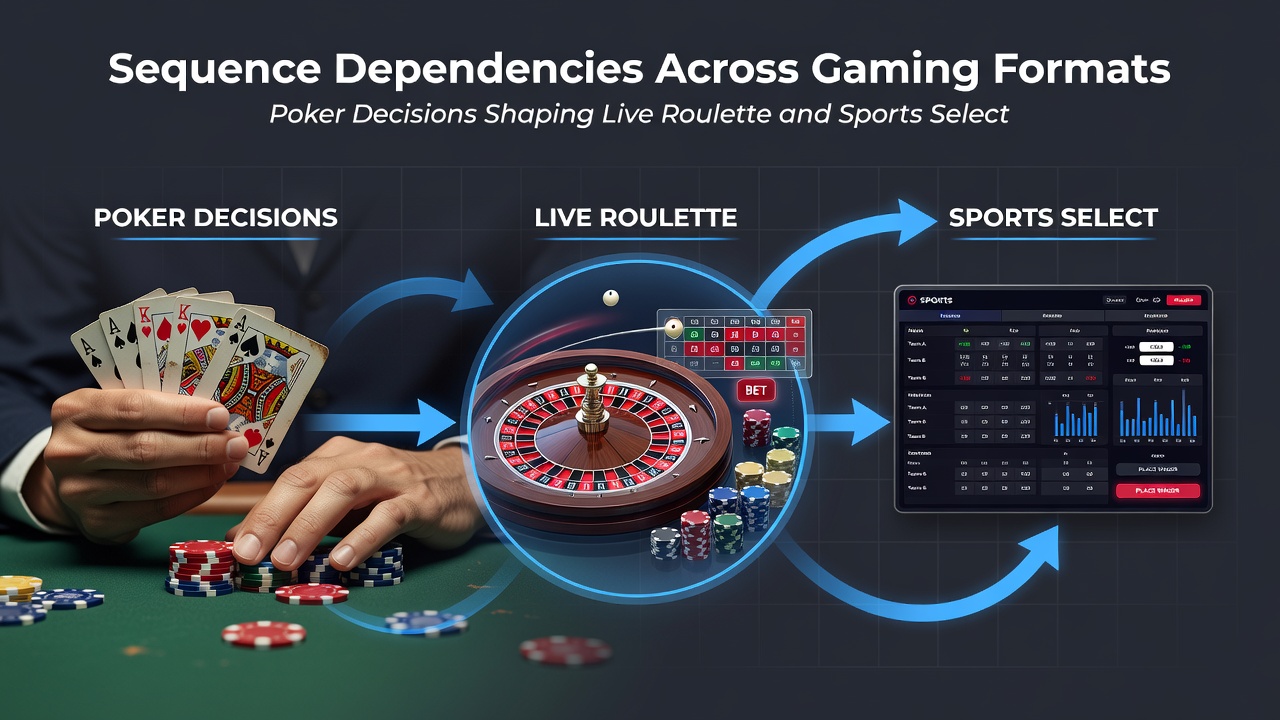
Mobile Sports Selections and Preceding Roulette Activity
Once players complete roulette sequences, activity logs show corresponding adjustments in how they approach sports event selections on mobile interfaces, particularly in markets involving point spreads or totals where prior exposure to sequential probability outcomes appears to influence stake distribution. Figures compiled through the first half of 2026 indicate that shorter roulette sessions tend to precede diversified sports portfolios, whereas longer roulette engagements align with concentrated selections on single events.
Operators report that participants who alternate between poker and roulette within compressed timeframes subsequently exhibit narrower ranges of sports bet types, focusing on events with higher implied probabilities that echo the hand-strength evaluations performed earlier. These transitions have been examined in reports issued by the Nevada Gaming Control Board, which tracks multi-product engagement statistics across licensed platforms operating within the state.
Integrated Promotion Structures and Sequence Reinforcement
Promotional mechanics that link activity across formats appear to amplify the observed sequences, with bonus triggers activated in poker sometimes carrying eligibility into roulette rounds and onward to sports markets accessed on mobile devices. Tracking data from June 2026 shows elevated completion rates for chained promotions when participants follow the poker-to-roulette-to-sports pathway compared with isolated product usage.
Platform designers have implemented interface elements that preserve decision history summaries across these formats, allowing users to reference prior poker outcomes while evaluating roulette payouts and then sports odds within the same application session. Such features coincide with measurable increases in session length when players navigate these connected pathways.
Conclusion
Platform telemetry and regulatory summaries compiled through June 2026 document recurring sequences in which poker-derived decision frameworks influence subsequent live roulette selections and mobile sports wagering patterns. These connections manifest through measurable shifts in bet sizing, decision timing, and market preferences that persist across separate gaming formats. Continued monitoring by oversight bodies such as the Alcohol and Gaming Commission of Ontario and the Nevada Gaming Control Board provides ongoing data sets that clarify the scale and stability of these cross-format relationships.